
When it comes to stroke care, every second matters.
That’s the message healthcare leaders at Lakewood Health System hope the community understands through expanded stroke awareness efforts and a multi-year stroke rehabilitation grant helping improve care close to home.
“Time is brain,” said Bobbie Poehler, director of Emergency and Trauma Services at Lakewood. “The brain is potentially being deprived of oxygen during this time, and early recognition and treatment make all the difference.”
Lakewood recently received a three-year stroke rehabilitation grant aimed at strengthening stroke recovery services for patients both in the hospital and in senior care settings.
The grant builds upon work already happening inside Lakewood’s Emergency Department and ambulance services to improve rapid stroke response.
Shortly before receiving the grant, Lakewood was recognized by the Minnesota Hospital Association for innovative work with EMS teams to improve stroke response times.
“We had trained our EMS staff to draw critical labs before the patient even arrives at the Emergency Department,” Poehler explained. “Those labs can immediately be handed off so results come back faster, and providers can determine the best course of treatment as quickly as possible.”
That early coordination between EMS and the Emergency Department can dramatically impact outcomes.
“What we’ve seen in the ED is the best outcomes happen when we know a stroke patient is coming,” said Poehler. “Everything becomes expedited — imaging, labs, diagnosis, treatment decisions. The sooner we know, the sooner we can act.”
Understanding B.E. F.A.S.T.
Lakewood is also increasing public education surrounding the B.E. F.A.S.T. stroke awareness tool, which helps people quickly recognize warning signs of stroke.
B.E. F.A.S.T. stands for:
- Balance — sudden loss of balance or coordination
- Eyes — sudden vision changes
- Face — facial drooping
- Arms — arm weakness
- Speech — slurred speech or difficulty speaking
- Time — call 911 immediately
Most people are familiar with F.A.S.T., but adding the ‘B’ for balance helps identify posterior strokes that may otherwise be missed, explained Poehler.
“And the ‘T’ for time is incredibly important. If you’re seeing any of these symptoms, getting help sooner rather than later is critical,” she added
Lakewood tracks stroke response times carefully because treatment windows are often measured in minutes, said Angie Paavola, system manager of Quality, Risk and Regulatory Services.
“The best practices are really defined by time,” Paavola said. “If patients wait too long, they may no longer qualify for treatments that could help restore brain function or reduce long-term damage.”
Dr. Christine Albrecht, Lakewood Chief Medical Officer, said too many people in rural communities hesitate to seek emergency care quickly enough.
“This is a medical emergency,” Dr. Albrecht stressed. “People here have wonderful relationships with their primary care providers, and sometimes they think, ‘I’ll call my doctor tomorrow.’ But with stroke symptoms, waiting can mean losing the opportunity for treatment.”
Stroke can happen at any age
Another misconception healthcare providers hope to address is the belief strokes only affect older adults.
“It’s not just older adults anymore. We’ve recently seen patients in their 40s and 50s, and I personally care for someone in their 30s who experienced a major stroke,” said Dr. Albrecht.
Risk factors can include high blood pressure, stress, sedentary lifestyles, poor nutrition and family history.
“We all think we’ll be okay until we’re older. But everyone needs to have this awareness,” stressed Dr. Albrecht.
Providers also encourage people not to ignore symptoms that may seem minor or temporary.
“Dizziness that comes out of nowhere, sudden word-finding difficulties or slurred speech are things people often second guess,” Dr. Albrecht said. “Even if symptoms improve, it could still be a warning sign of a larger event to come.”
Expanding stroke rehab locally
While emergency stroke treatment is critical, the new grant also focuses heavily on rehabilitation and recovery after patients return to the community.
“The goal is helping patients get back closer to home, closer to family and support systems. That can make such a difference in recovery,” said Paavola.
Lakewood partnered with Big Stone Therapies to strengthen stroke rehabilitation care plans and identify therapy gaps for local patients.
One significant addition made possible through the grant was specialized vocal stimulation therapy equipment used to help stroke patients experiencing swallowing difficulties or aphasia.
Previously, many patients had to leave the Staples area for that therapy.
“Through the grant, we purchased the equipment and helped fund staff training and certification,” Paavola said. “Now patients can receive that therapy right here in our community.”
The grant also supports expanded education for patients, families and healthcare teams, with future plans, including resource guides for post-stroke services such as specialized vision care, driving evaluations and adaptive equipment resources.
Care close to home matters
One of the most meaningful goals is helping stroke patients recover near the people and places they know best.
“Being close to home matters,” Dr. Albrecht said. “Being around family and having that support absolutely impacts healing.”
Dr. Albrecht shared a personal story about her own father recovering more successfully after transferring back to Lakewood following a major surgery at a larger medical center.
“He got back here and immediately felt at home … People knew him. Staff responded quickly. He was comfortable. You could see the difference almost instantly,” she said.
That same philosophy now drives Lakewood’s expanding stroke rehabilitation efforts.
“We know there are times patients need specialized care elsewhere first,” Paavola said. “But once they’re stable enough, we want them back here — recovering in their own community, surrounded by support.”
And it all starts with recognizing the warning signs early.
“The biggest thing we want people to remember is: Don’t wait. If something feels off, call 911. Minutes matter,” said Poehler.
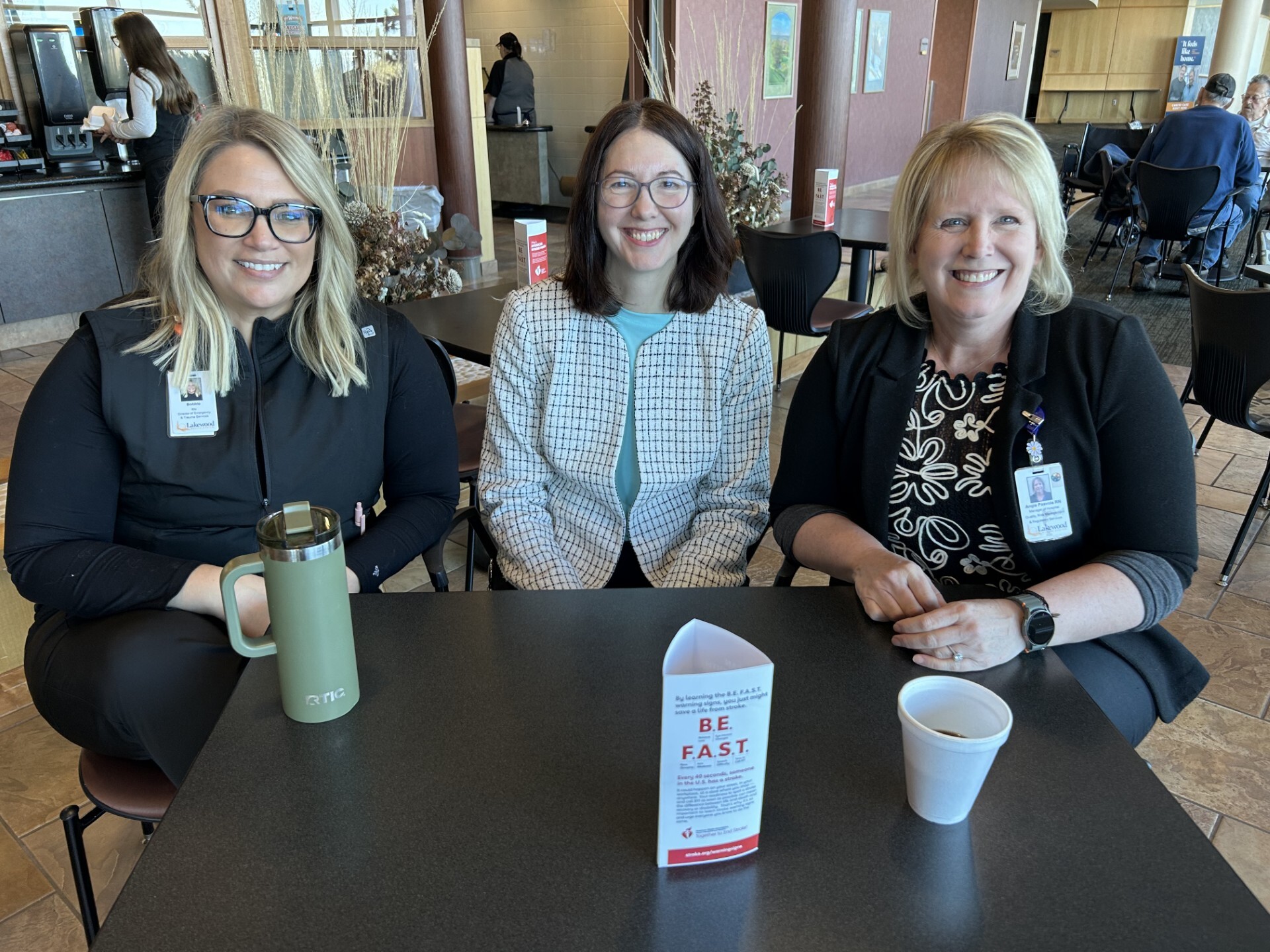
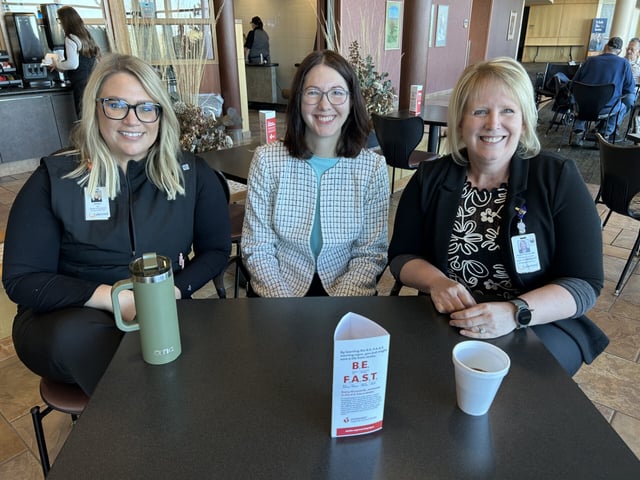
Pictured, from left, Bobbie Poehler, Director of Emergency & Trauma Services; Dr. Christine Albrecht, Chief Medical Officer; and Angie Paavola, System Manager of Quality, Risk and Regulatory Services, share the importance of knowing the signs of stroke and acting B.E. F.A.S.T.